What Businesses Actually Use AI Agents For — and Why Gartner Expects 40% of Projects to Be Cancelled
Escalating costs, unclear business value, inadequate risk controls. None of those is a technology failure — all three are decisions made before anyone writes code.

Gartner expects more than 40% of agentic AI projects to be cancelled by the end of 2027. That figure comes from a poll of over 3,400 organisations, and the reasons it gives are worth reading carefully: escalating costs, unclear business value, and inadequate risk controls.
Notice what is not on that list. Not “the technology did not work”. Every one of those three is a decision made before a line of code is written.
This is about the other side — what businesses are genuinely using agents for, what separates the deployments that survive from the ones that get quietly shut down, and how to tell whether what you are being sold is an agent at all.

First, the adoption picture
The direction is not in doubt. Gartner forecasts that 40% of enterprise applications will embed task-specific AI agents by the end of 2026, up from under 5% in 2025 — one of the sharpest adoption curves in enterprise software.
But adoption inside products is not the same as organisations successfully building their own. Industry surveys suggest only around 11% of organisations have production-ready agentic systems, and roughly 42% still have no formal agentic AI strategy. The same surveys put the share of pilots that never reach production near 89%, while the minority that do are reported to return around 171% ROI.
Treat those last figures as directional — they come from industry aggregators rather than primary research, and survivorship is doing obvious work in a 171% return. The shape is still informative: a small proportion get this right and do well; most stall somewhere between pilot and production.
“Agent washing” — check what you are buying
Gartner names a specific problem inflating the numbers: agent washing, where existing chatbots, RPA scripts and assistants are relabelled as agents without the underlying capability changing.
The test is simple, and it is worth putting to any vendor in exactly these words: what does this decide without a human?
- If it answers questions from a knowledge base, it is a chatbot. Useful, but a chatbot.
- If it follows a fixed sequence you defined, it is automation. Also useful, also not an agent.
- If it chooses its own steps toward a goal, uses tools, and adapts when a step fails — that is an agent, and it carries a different risk profile entirely.
The distinction matters commercially because the governance you need, and the failure modes you inherit, follow the third definition and not the first two.

What agents are genuinely good at
The pattern across deployments that survive is consistent. Agents earn their place where the task is repetitive, bounded, and cheap to check. All three, not two of three.
Repetitive — it happens often enough that reliability compounds and setup cost amortises.
Bounded — success and failure are recognisable. “Categorise this ticket and route it” has a defined outcome. “Improve our customer relationships” does not.
Cheap to check — a human can verify the output quickly, or a wrong answer is inexpensive to reverse. This is the one most often ignored, and it is the one that determines whether you can run the thing without an expensive review layer eating the savings.
Areas where that combination genuinely holds:
- Customer support triage — classifying, routing, drafting replies for review, resolving well-understood requests. The most proven category by some distance.
- Research and summarisation — gathering from several sources into a structured brief a human then uses.
- Data preparation — reconciling records, filling gaps, normalising formats across systems that were never designed to talk.
- Document processing — extracting structured fields from invoices, contracts and forms.
- Internal knowledge retrieval — answering staff questions across scattered systems, where a wrong answer costs a follow-up question rather than a customer.
The clearest published example is Klarna, running an agent system at 85 million users with an 80% reduction in average resolution time — a support use case, at extreme volume, with checkable outputs.

Where they fail
Inverting the three tests gives you the avoid-list. Be wary of anything that is:
- Rare but high stakes. Low volume never amortises the build, and high stakes means you need review anyway. You have bought cost without saving.
- Open-ended. Gartner’s own assessment is that current models lack the maturity to pursue complex business goals autonomously or follow nuanced instructions over time. Vague goals are where projects quietly die.
- Expensive to verify. If checking the agent takes nearly as long as doing the work, there is no gain — only a new failure mode.
- Irreversible. Anything that moves money, sends external communications, or changes records without a way back needs an approval gate, and the gate usually removes the efficiency case.

Why the 40% get cancelled — and how not to join them
Gartner’s three stated causes map onto three concrete disciplines.
Escalating costs
Agentic workloads consume far more model calls than a single query, and pilots are run at volumes that hide it. Before committing, calculate cost per task at realistic volume — not at pilot volume — and set a per-task budget the system enforces. Most cost surprises are volume surprises.
Unclear business value
Define the measurable outcome before choosing a vendor, and make it a number you already track: minutes per ticket, cost per document, backlog size, time to first response. “Improve efficiency” is how a project arrives at month nine with nothing to show a finance director.
Inadequate risk controls
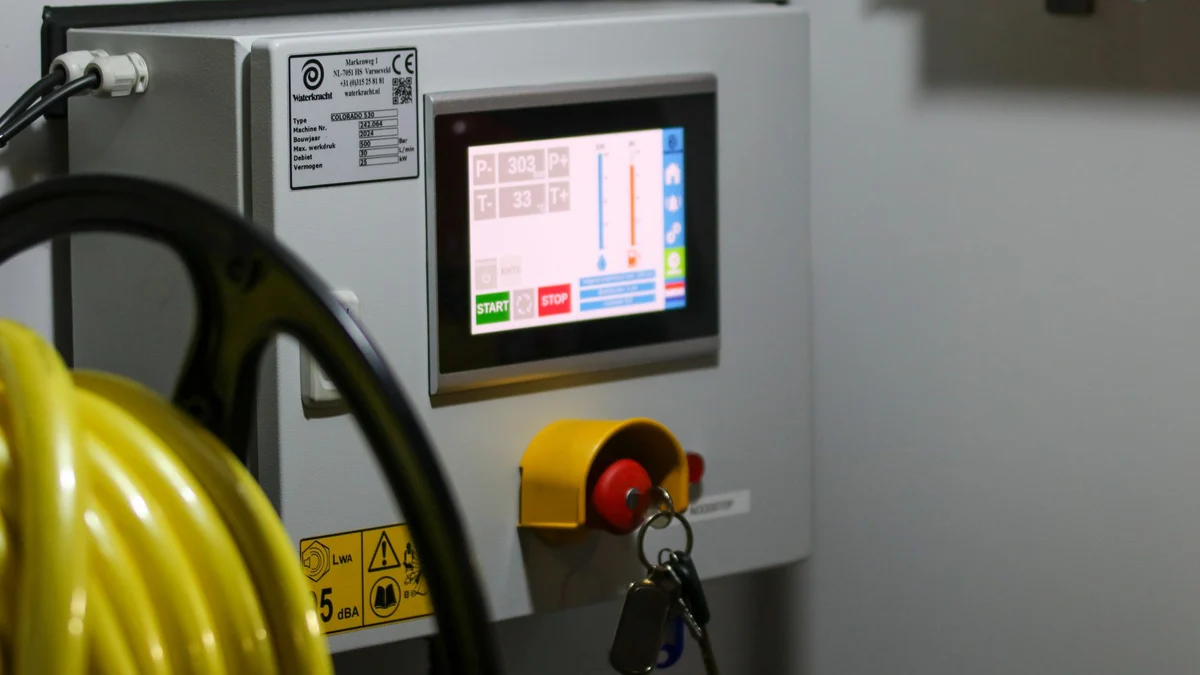
Decide in advance what the agent may do alone, what needs approval, and what it may never do. Log every action. Have a stop switch that someone who is not an engineer can reach. This is also where regulated sectors need to look hardest — in healthcare, for instance, whether a human reviews the output before it acts can change the product’s regulatory status entirely.
A sensible first deployment
If you are starting: pick one repetitive, bounded, cheaply-checked task. Run the agent alongside the existing process rather than replacing it. Measure the same metric both ways for a month. Keep a human approving anything consequential. Only then decide whether to widen the scope or stop.
That approach is slower than the pitch deck suggests, and it is roughly the difference between the 11% and the 89%.
For the platforms available if you decide to build, see our comparison of AI agent builders, and for what construction actually involves, how to build an AI agent. If funding the build is the constraint, our guide to UK business growth funding covers grant routes such as Innovate UK alongside debt and equity.
Frequently asked questions
What percentage of AI agent projects fail?
Gartner predicts over 40% of agentic AI projects will be cancelled by the end of 2027, based on a poll of more than 3,400 organisations, citing escalating costs, unclear business value and inadequate risk controls. Industry surveys separately suggest around 89% of pilots never reach production.
What is agent washing?
Relabelling existing chatbots, scripts or assistants as “AI agents” without any change in capability. Gartner identifies it as a factor obscuring genuine adoption rates. The test is what the system decides without a human.
What are AI agents actually good for in business?
Tasks that are repetitive, bounded and cheap to check — support triage, research and summarisation, data preparation, document processing and internal knowledge retrieval. Klarna’s support deployment reports an 80% reduction in average resolution time at 85 million users.
What should I not use an AI agent for?
Rare high-stakes decisions, open-ended goals, anything expensive to verify, and irreversible actions without an approval gate. Current models are not considered mature enough to pursue complex business goals autonomously over time.
How fast is business adoption of AI agents?
Gartner forecasts 40% of enterprise applications will embed task-specific agents by the end of 2026, up from under 5% in 2025 — though only around 11% of organisations are reported to have production-ready systems of their own.
How do I avoid my agent project being cancelled?
Cost it at realistic volume rather than pilot volume, define a metric you already track before choosing a vendor, and decide upfront what the agent may do alone, what needs approval and what it may never do.
Gartner figures are from its June 2025 prediction and published forecasts. Adoption, ROI and market-size percentages attributed to “industry surveys” come from secondary aggregators and should be treated as directional. General information, not investment advice.
Sign up to our news alerts
The day's business headlines in your inbox each morning.
Unsubscribe from any email.