What AI Chatbot Platforms Actually Cost in 2026 (The Headline Price Is Rarely the Price)
Most platforms do not charge a monthly fee — they charge for outcomes. Which means the better your AI performs, the more you pay, and the total commonly lands at three to five times the advertised figure.

Chatbot platforms advertise a monthly price. Most of them do not charge a monthly price — they charge for outcomes, and the total commonly lands at three to five times the headline figure once add-ons and overages are counted.
That is the actual comparison worth doing. Not which platform has the best interface, but which pricing model behaves sensibly as your volume grows and your AI gets better.

The three pricing models, and how they fail
Flat rate plus an AI add-on
You pay a base subscription and buy AI conversations in blocks. Costs are predictable and capped, but the cap is real — exceed your block and you either upgrade or the AI stops.
Per resolution
You pay each time the AI resolves something. This is the model to understand properly, because it inverts the usual software incentive: the better your AI performs, the more you pay. A platform that resolves 80% of a growing volume produces a bill that rises with your growth and with your AI improving.
Per seat
The traditional model, still underneath most of the above. It scales with headcount, which is the thing AI is supposed to reduce — so on its own it captures none of the benefit.
In practice almost every major platform now combines two of these, which is why the headline price tells you so little.
What the main platforms actually cost
Tidio — flat rate with a separate AI meter
Base packages run from $29 a month (Starter) up to $2,999 a month (Premium). The Lyro AI capability is billed separately: $39 a month for 50 conversations, rising to $289 a month for 500 conversations.
Comparisons generally place it as the best value for small teams — roughly $29–79 a month, with automated resolution in the 55–65% range. The constraint is the conversation blocks: a busy month means an upgrade.
Intercom — seats plus $0.99 per outcome
Seats are $29 (Essential), $85 (Advanced) or $132 (Expert) per seat per month. On top of that, Fin charges $0.99 per outcome, with a 50-resolution monthly minimum.
Do the arithmetic at scale and the shape becomes clear: at 2,000 monthly resolutions that is $1,980 a month in AI fees alone, before a single seat is counted.
Zendesk — seats plus $1.50 per resolution
Resolutions are billed at $1.50. A worked example for a five-agent team comes to $825 a month minimum — ($115 + $50) × 5 — before resolution volume is added.
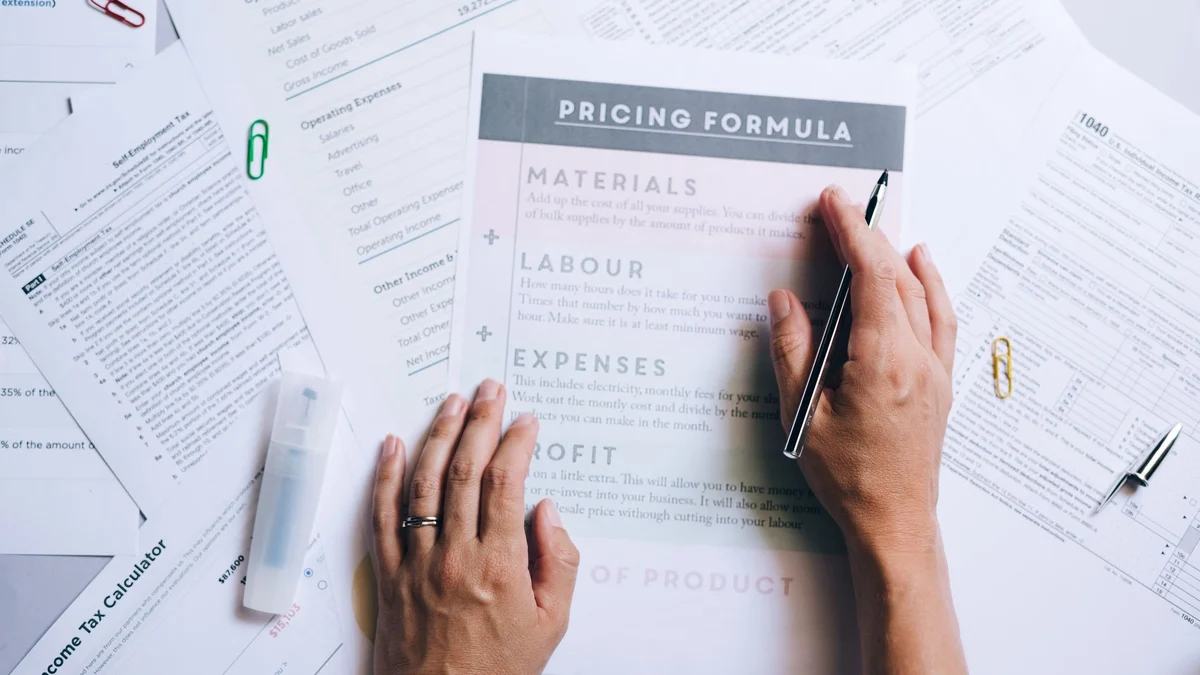
The question to ask at procurement
Not “what does this cost per month”. Ask:
“What does this cost at three times my current volume, if the AI gets better?”
On a per-resolution model, both halves of that sentence increase the bill. Triple your tickets and lift resolution from 50% to 75%, and your AI spend does not go up threefold — it goes up around four and a half times. That is the scenario to model before signing, and it is the one no pricing page shows you.
Three follow-ups worth putting in writing:
- What counts as a resolution? Definitions vary, and you are buying that definition.
- Is there a cap or a spend alert? Per-resolution billing with no ceiling is an uncapped liability during a traffic spike or an incident.
- What happens to conversations the AI cannot handle? If you pay for the attempt as well as the outcome, escalations cost twice.

Choosing by size
Under 20 people, under roughly 300 interactions a week. Flat rate with an AI add-on. Predictability matters more than sophistication, and the block limits are unlikely to bite. Tidio is the usual recommendation in this bracket.
Mid-market with a dedicated support team and complex routing. Intercom and Zendesk are built for this, and the per-outcome pricing is more defensible when you have the volume to measure against a real cost-per-contact baseline.
High volume with predictable, repetitive queries. This is where per-resolution pricing hurts most, and where building on a general platform — or negotiating a volume floor rather than a per-unit rate — starts to pay.

Build versus buy
Buying wins on speed, on the integrations you would otherwise write yourself, and on the fact that someone else maintains it. Building wins on unit economics at high volume, and on control over data and behaviour.
The honest crossover point is volume. At a few hundred conversations a month, buying is not close — the build cost will never amortise. At tens of thousands of repetitive, well-understood conversations, per-resolution fees start to look like a tax on your own traffic, and the calculation changes.
Between those, buy, measure for six months, and revisit with real numbers rather than projections.
One caveat on everything above: these are list prices in US dollars from vendor and comparison sources, and they move. Treat them as the shape of the market rather than a quote, and get current pricing for your own volume and region.
Before you shortlist anything, it is worth being clear on what you are actually buying — our explainer on the difference between a chatbot and an AI agent covers why two products at the same price can do very different amounts of work. And if this is for a support team specifically, what the customer service benchmarks actually show has the resolution and escalation data you should be budgeting against.
Frequently asked questions
How much do AI chatbot platforms cost in 2026?
Entry plans start around $29 a month, but the total commonly reaches three to five times the headline once AI usage and add-ons are counted. Intercom charges $0.99 per Fin outcome on top of seats from $29 to $132; Zendesk charges $1.50 per resolution; Tidio bills AI separately from $39 a month for 50 conversations.
What is per-resolution pricing?
You pay each time the AI resolves a query rather than a flat subscription. It aligns cost with usage but inverts the normal incentive — the better the AI performs, the higher the bill.
Which chatbot platform is best for a small business?
For teams under 20 handling under roughly 300 interactions a week, flat-rate platforms with an AI add-on are usually the better fit, with Tidio commonly recommended at $29–79 a month and 55–65% automated resolution.
What should I ask a vendor before signing?
What counts as a resolution, whether there is a spend cap or alert, what happens when the AI cannot handle a conversation, and what the total looks like at three times your current volume with a higher resolution rate.
Should I build my own chatbot instead?
Only at high volume with repetitive, well-understood queries. At a few hundred conversations a month the build cost will not amortise. At tens of thousands, per-resolution fees start to justify the engineering.
Prices are vendor list prices in US dollars as published in 2026 comparisons and change frequently. Verify current pricing for your volume and region before committing.
Sign up to our news alerts
The day's business headlines in your inbox each morning.
Unsubscribe from any email.